
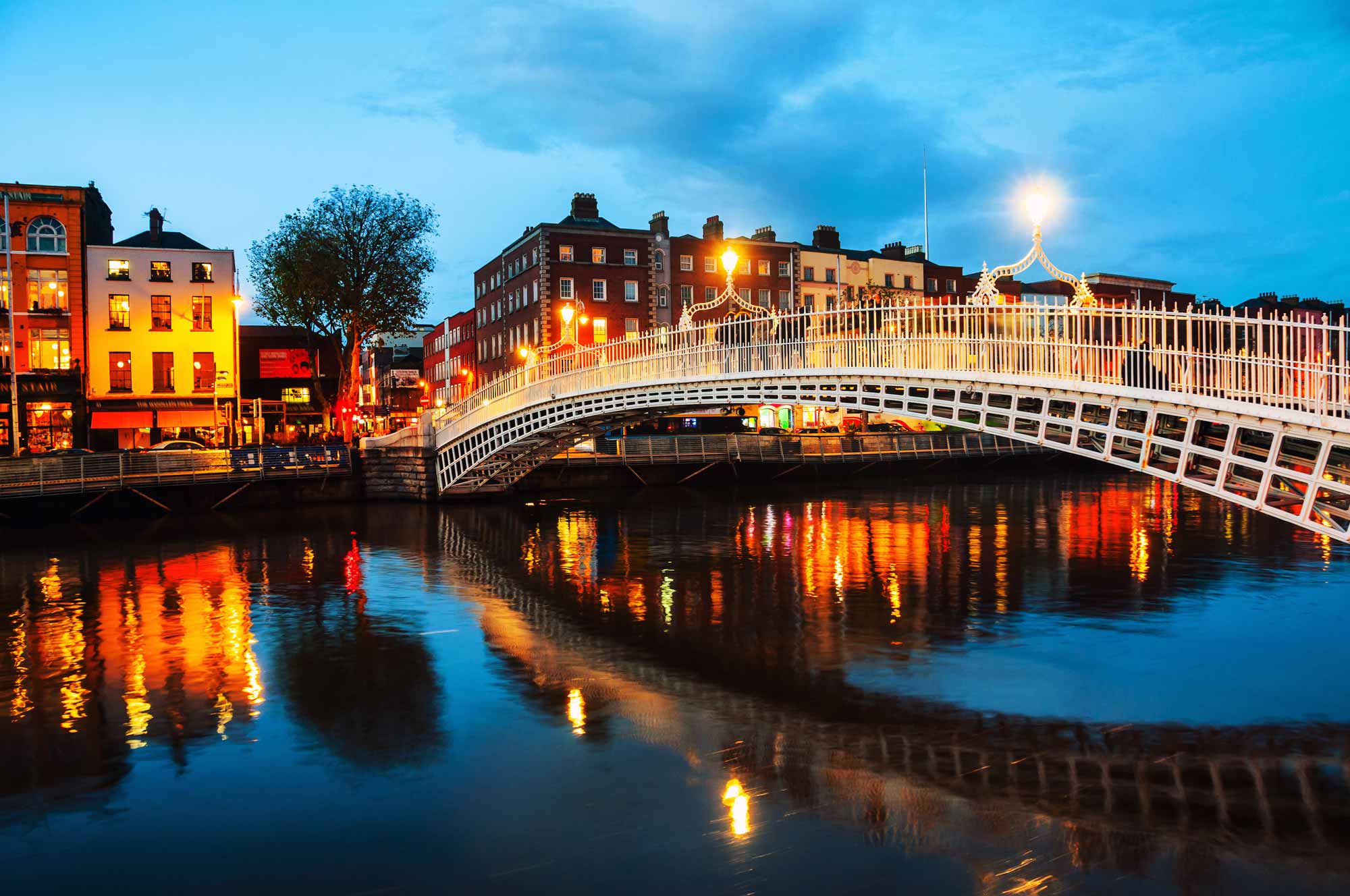
Ireland’s rail network offers a comfortable and scenic way to travel between many of the country’s major cities and regions.
With routes connecting Dublin, Cork, Galway, Limerick, Waterford and Sligo, travelling by train is a convenient option for exploring the country.
Rail services in the Republic of Ireland are operated by Iarnród Éireann (Irish Rail), providing intercity, regional and commuter routes, including the DART services in Dublin.
Whether you’re travelling between cities or heading out to the coast or countryside, trains are a reliable way to get around.
At Trainline, we’re here to help you plan your journey with ease. Simply search for your route to compare train times and fares, and book tickets all in one place.
Take a look at the map below to discover where you can travel by train across Ireland.
Live: Rail and coach across Ireland!
Ireland has officially arrived on Trainline.
You can now book rail and coach travel across Ireland on Trainline, making it easy for international travellers to explore beyond Dublin.
Travel to Galway, Cork, Limerick and more, with all fares and refund rules clearly shown before you book.
No need to navigate unfamiliar local operators – everything is in one simple, trusted app. Plan your Ireland trip with confidence and see more of the country, effortlessly.
Who runs trains in Ireland?
If you’re travelling to Ireland by rail and ferry, you can also connect to ferry ports via train services across Great Britain.
These routes link with ferry crossings to Ireland, including:
- Holyhead (Wales) to Dublin
- Fishguard (Wales) to Rosslare
- Pembroke Dock (Wales) to Rosslare
- Cairnryan (Scotland) to Belfast and Larne
- Liverpool (England) to Belfast
Train services to these ferry ports are operated by a range of rail companies, including Avanti West Coast, Transport for Wales and Great Western Railway.
This list focuses on standard rail services. Luxury rail experiences, such as the Belmond Grand Hibernian, also operate in Ireland.
Train companies in Ireland
Irish Rail
Operating the majority of rail services in the Republic of Ireland, Irish Rail (Iarnród Éireann) is Ireland’s national railway company. It runs intercity, regional and commuter services across the country, connecting Dublin with cities including Cork, Galway, Limerick, Waterford and Sligo, as well as operating cross-border services to Belfast in Northern Ireland.
Types of train in Ireland
Different types of train make up Ireland's domestic and cross-border rail network. These include Intercity, DART and Commuter services. Find out more about some of the train types in Ireland below.
| Train type | Train details | Passenger information |
|
InterCity |
|
|
| DART (Dublin Area Rapid Transit) |
|
|
| Commuter |
|
|
Irish rail passes
If you’d rather not think about individual tickets while traveling in Ireland, then you’ll be after some sort of Irish rail pass. Thankfully, such a thing does exist! There are two, in fact – one for European citizens/residents (Interrail Pass) and one for those living anywhere other than Europe (Eurail Pass).
Interrail Pass
Let’s say you want an Interrail Pass for Poland – you can simply select the ‘Interrail One Country Pass’ for unlimited use of the Polish rail network. And, as a bonus, certain attractions and shops will grant you a discount if you’re a Interrail Pass holder. What’s not to like about that?
Find out more about the Interrail Pass.
Eurail Pass
If, on the other hand, you’re not an European resident, you’ll need to grab the Eurail One Country Pass. The premise is similar to that of the Interrail Pass, as you can get unlimited travel throughout the Polish rail network. There’s nowhere in Poland you can’t go with this pass, and those under 28 can even travel with the further discounted Youth Pass.
Learn more about the Eurail Pass.
Explore more of Europe by train
Inspired by the thought of rail travel through Ireland? Itching to see even more of Europe by train? You're in luck. We've got a great range of guides to help you decide on your next European train trip!